What Are MCPs and APIs? A Practical Guide to Integrated AI Automation for Small Businesses
APIs and MCP are helping AI connect with business systems. Here's what those terms actually mean and when a small business should care.
What's the difference between an API and MCP?
An API is an interface that allows software systems to exchange data or perform actions. MCP is an open protocol designed to standardise how AI applications connect with tools and contextual data. MCP can work with existing APIs rather than replacing them.
One of the biggest changes happening in AI isn't another chatbot.
It's connection.
For the last few years, most businesses have experienced AI as somewhere they go.
Open an AI assistant.
Ask something.
Copy the answer.
Paste it somewhere else.
The next stage is different.
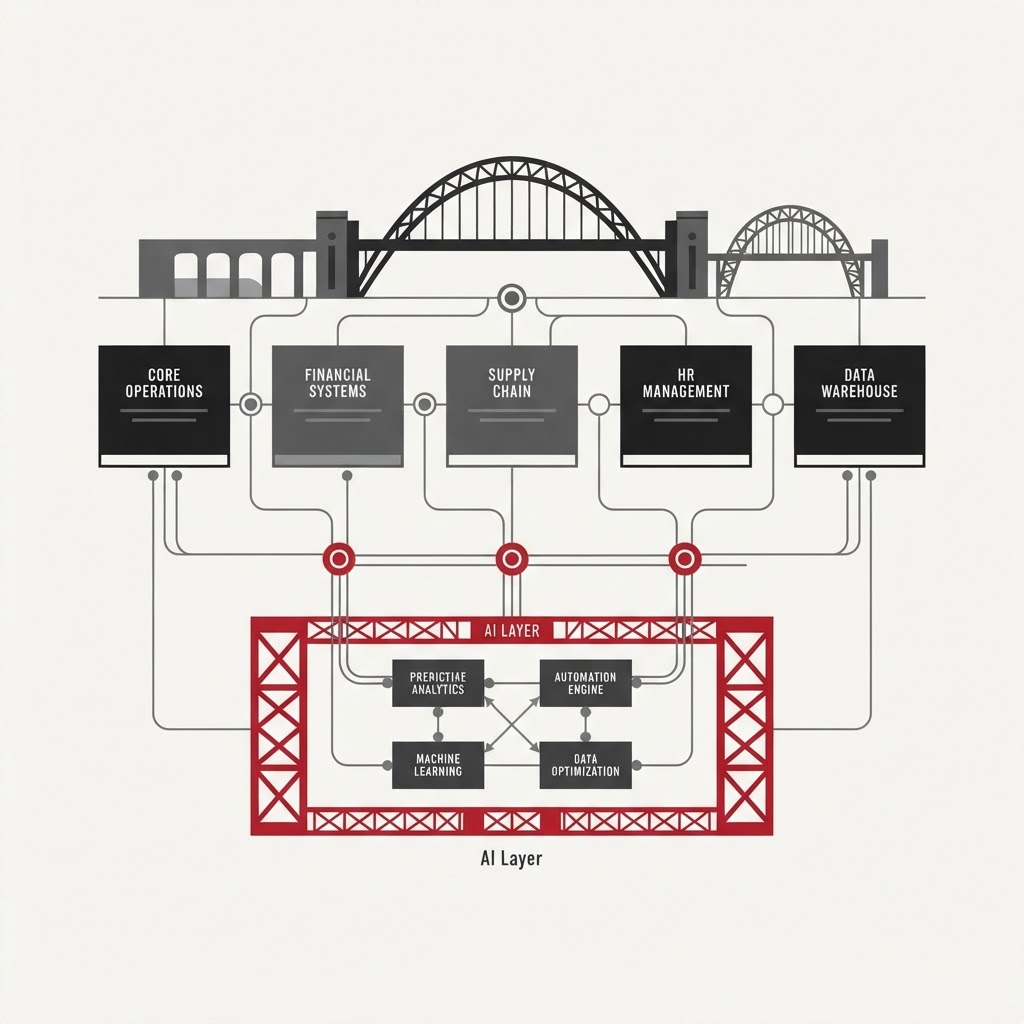
AI is increasingly able to work with the systems businesses already use.
That's where APIs and MCP enter the conversation.
What is an API?
An API — Application Programming Interface — allows different software systems to communicate with each other in a controlled way.
For example, an integration might allow information to move between a CRM, form, accounting platform or another business system without somebody manually copying it.
APIs aren't new.
Businesses have used them for years.
AI simply creates new ways to make use of those connections.
What is MCP?
MCP stands for Model Context Protocol. It is an open protocol designed to standardise how AI applications connect to external tools, systems and sources of context.
A simple way of thinking about it is:
An API lets software communicate.
MCP provides a more standardised way for AI applications to discover and interact with tools and context made available to them.
It doesn't magically give AI access to everything.
Permissions, authentication and controls still matter enormously.
Why does this matter to a small business?
Because the useful future of AI isn't necessarily having six separate AI subscriptions.
It's reducing the gaps between the systems you already use.
Imagine a business enquiry arrives.
Instead of somebody repeatedly moving information manually, an appropriately designed workflow might:
- 1.capture the enquiry
- 2.add information to the correct business system
- 3.categorise the request
- 4.prepare an internal summary
- 5.create a follow-up task
- 6.draft an appropriate response
- 7.leave a human to approve the important decision
That's integrated automation.
Does everything need MCP?
No.
And this is where the hype can get silly.
Sometimes an existing native integration is enough.
Sometimes an automation platform is appropriate.
Sometimes an API is required.
Sometimes an MCP connection makes sense.
Sometimes the best solution is don't automate it at all.
The technology should follow the business requirement.
Not the other way around.
What should you check before connecting AI to business systems?
At minimum:
Data: What information will the system access?
Permissions: What can it read, create, update or delete?
Authentication: How is access controlled?
Human approval: Which actions should require a person?
Failure: What happens when something goes wrong?
Auditability: Can you understand what happened afterwards?
Value: Is automating this actually worth the effort?
That final question gets forgotten surprisingly often.
Start with the workflow, not MCP
Before asking:
"Can we connect this using MCP?"
ask:
"Why are we doing this task in the first place?"
That's consistent with the approach I take throughout GrowthZone AI: understand where time is disappearing and where processes are messy before introducing more technology.
It's the same point made in AI isn't the problem — misalignment is, and it connects directly to how to know if your business is ready for AI and our wider guide to practical AI for North East businesses. If you'd like a quick sense of where you stand, take the AI Readiness Scorecard.
Do small businesses need MCP?
Not necessarily. A small business should first identify a worthwhile workflow and then choose the simplest secure integration method. That might be a native integration, an automation platform, an API, an MCP-based connection or no automation at all.
Further reading
[Model Context Protocol — official documentation](https://modelcontextprotocol.io/)
The Model Context Protocol is an open standard, and its specification continues to evolve — including its approach to authentication, security and production use. If you want the authoritative technical detail, the official documentation is the right source rather than second-hand summaries.
Want to see what connected AI workflows can look like in a real one-person business? Kaye shares how GrowthZone AI now uses multiple AI tools, assistants and automation across marketing, sales, proposals and CRM processes.

Written by
Kaye Nicholson
Founder, GrowthZone AI · Bdaily Columnist
Kaye Nicholson is the founder of GrowthZone AI and a columnist for Bdaily, helping businesses, charities, founders and teams use AI in simple, practical ways without jargon or overwhelm.
Book a short AI chatFound this helpful? Share it:
Reader feedback
Got a view on this week's AI Reality Check? Join the conversation on LinkedIn or send your thoughts directly.
Get the AI Reality Check weekly newsletter
Weekly practical AI updates for UK businesses: what changed, what it means, and what to watch next.
Got systems that should talk to each other?
Start with the workflow, not the technology. GrowthZone AI can help identify what's worth connecting and what should stay human. Get in touch.
Get in touch